Qatar Embassy Attestation: A Complete Guide
Learn everything about Qatar embassy attestation for educational, personal, and commercial documents. Understand the process of document legalization and ensure your documents meet the necessary requirements for use in Qatar.
11/12/20257 min read
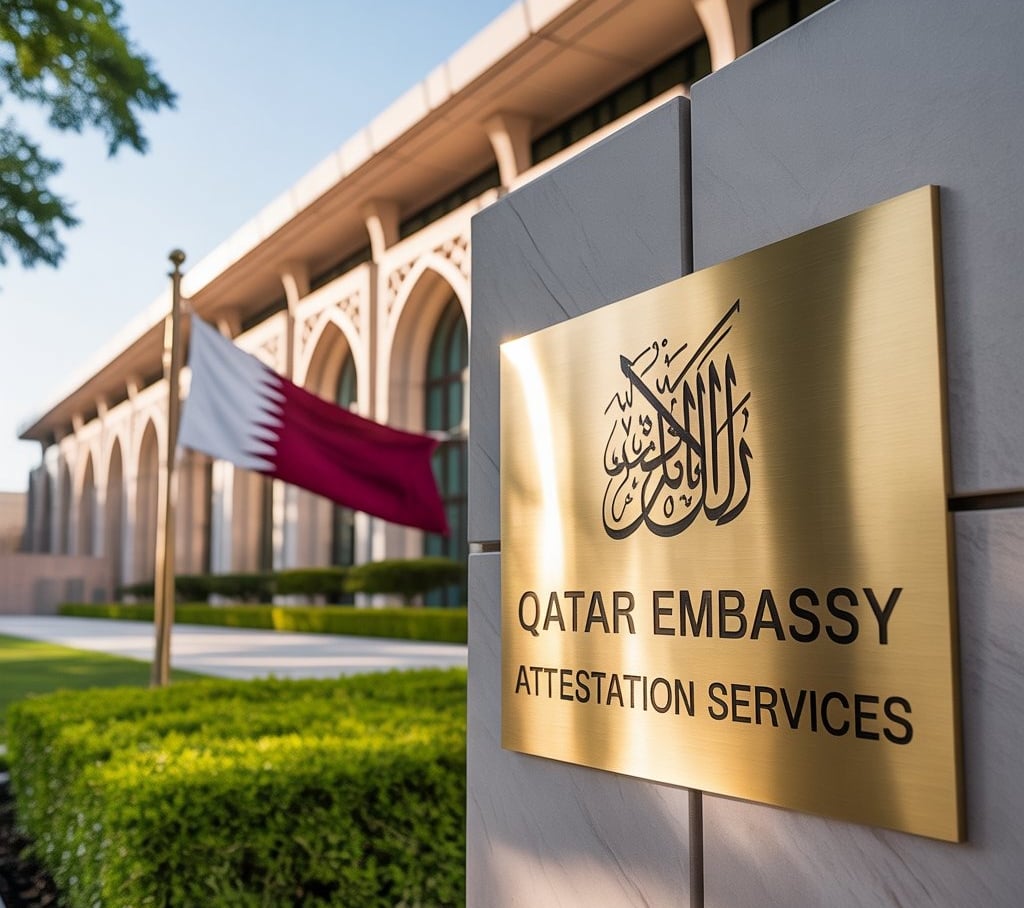

Introduction to Document Attestation
Document attestation is a formal procedure that involves verifying the authenticity of various types of documents, which is essential for their acceptance in foreign countries. This process is particularly significant for individuals intending to use their documents in Qatar, a nation with specific requirements for document validation. The primary goal of document attestation is to ensure that the documents presented are legitimate, accurate, and legally recognized by the relevant authorities. Thus, the attestation serves as a safeguard against fraud and misrepresentation when individuals or entities seek to engage in activities that require official documentation.
Typically, several types of documents require attestation. These may include educational certificates, marriage licenses, birth certificates, and commercial documents such as contracts and invoices. Each category necessitates a distinct approach to attestation, according to the requirements set forth by the Qatari government. Educational document attestation is vital for anyone planning to pursue higher education or employment opportunities in Qatar, as educational credentials must be verified to confirm the individual’s qualifications. Personal documents like marriage and birth certificates are also essential for residency or family reunification purposes, thus requiring a thorough attestation process to ensure their validity.
In the case of commercial documents, companies conducting business transactions and partnerships in Qatar must undertake attestation to validate contracts and agreements. This ensures that all parties involved operate under a framework that recognizes and acknowledges the agreements set forth in the documented form. As such, understanding the concept of document attestation is crucial for anyone dealing with paperwork for educational, personal, or commercial purposes in Qatar, as it lays the groundwork for further discussion on the specific requirements and procedures involved in the attestation process.
Importance of Attestation for Educational Documents
Attestation of educational documents is a crucial step for individuals seeking further education, professional opportunities, or recognition in Qatar. The requirement for attestation applies to various types of educational documents, including degrees, diplomas, and transcripts. This process serves to verify the authenticity of these documents, ensuring they meet the legal standards set by Qatari authorities. Without proper attestation, educational documents may not be accepted for enrollment in educational institutions or for employment purposes within the country.
The attestation process typically involves multiple stages, including verification from the issuing educational institution, authentication from relevant government bodies, and finally, endorsement by the Qatar embassy or consulate. Each stage is essential for maintaining the integrity of the educational qualifications being presented. Educational documents that have been attested carry more weight, as they provide assurance to employers and educational institutions regarding the legitimacy of the qualifications held by an individual.
Moreover, the implications of failing to obtain the necessary attestations can be significant. Students and professionals may face difficulties in pursuing further studies, applying for jobs, or even securing professional licensing within Qatar. The educational attestation process also helps in preventing fraudulent practices, thereby protecting the interests of all parties involved. Additionally, it promotes transparency and trust, which are vital elements in the growing educational landscape in Qatar.
In light of these reasons, understanding the specific requirements and processes involved in the attestation of educational documents becomes imperative for anyone looking to navigate the educational or professional systems in Qatar effectively. Ensuring that appropriate steps are taken in this regard can open doors to numerous opportunities for personal and professional growth.
Attestation Process for Personal Documents
The attestation of personal documents, including marriage certificates, birth certificates, and identity proof, is a crucial procedure for individuals seeking to move to or work in Qatar. This process validates the authenticity of essential documents, ensuring they meet the legal requirements of the host country. The attestation process typically involves several stages, each requiring specific verifications by governmental authorities.
Initially, the document must be certified by the relevant local authority in the country of origin. For example, birth and marriage certificates often require verification from the respective civil registry offices. After this local certification, the document must be taken to the Ministry of Foreign Affairs (MoFA) in the home country. The MoFA is responsible for affirming the authenticity of documents and ensuring they are legitimate and valid for further use.
Subsequently, the process continues with the Qatar Embassy or Consulate, where the document is further authenticated for use in Qatar. It is imperative to check the specific requirements of the Qatar Embassy, as they may have particular stipulations regarding document types and additional documentation needed. This stage is often viewed as the most significant aspect of the attestation process, as it directly involves international verification.
The necessity of attesting personal documents cannot be overstated for individuals intending to establish their residency or secure employment in Qatar. Without proper attestation, individuals may face challenges in validating their identity or familial status, which could hinder their ability to navigate legal, educational, or employment sectors in the country. Furthermore, attestation ensures that personal documents are acknowledged and accepted by Qatari institutions, facilitating smoother transitions for expatriates.
Commercial Document Attestation: A Key to Business Validity
In the context of performing business operations in Qatar, the attestation of commercial documents serves as a fundamental step towards ensuring validity and compliance with the local legal framework. Attestation not only helps to authenticate the documents but also affirms their legitimacy in the eyes of local authorities and potential business partners. Types of commercial documents that typically require attestation include contracts, business licenses, and partnership agreements, which are pivotal in establishing a company's operational framework.
The process of attesting commercial documents generally begins with the notarization of the relevant documents by a licensed notary public. Following this, the documents must be submitted to the Ministry of Foreign Affairs in Qatar for further validation. This multi-step procedure ensures that the documents meet the standards required by local regulations and can be recognized as legally binding. Additionally, various government departments may also require attestation depending on the nature of the document and its intended use, which adds layers of responsibility for businesses.
Business operations and legal compliance in Qatar are significantly influenced by the attestation process. Without proper attestation, companies may face challenges in executing contracts or navigating partnerships, as unvalidated documents might lead to disputes or legal challenges. Regulatory bodies often scrutinize the authenticity of documents, making attestation essential for maintaining contractual obligations. Furthermore, a failure to have documents attested can hinder a company’s ability to obtain licenses or permits necessary for legal operation within the country.
Thus, understanding the processes and requirements around commercial document attestation is crucial for any business operating in Qatar, as it mitigates risks associated with non-compliance and fortifies the integrity of business practices.
Step-by-Step Guide to the Attestation Process
The attestation process for documents intended for use in Qatar is a vital procedure that ensures their authenticity and validity. To navigate this process effectively, individuals and businesses must follow specific steps, beginning with document preparation. First, it is essential to gather all relevant documents that require attestation, such as educational certificates, marriage licenses, or commercial documents. All original documents should be clear and legible.
Once the documents are prepared, the next step involves identifying the authorities responsible for attestation. Generally, documents must be attested in the home country by the relevant authorities, which usually include the Ministry of Foreign Affairs or a designated governmental body. In some cases, it may be necessary to have the documents verified by the respective embassy or consulate of Qatar in your home country. It is crucial to verify the specific requirements and procedures applicable for your documents.
Following the identification of the appropriate authority, submit the documents along with any required forms and fees. Each authority may have distinct submission procedures; therefore, it is important to consult their guidelines carefully. After submission, the processing time may vary from a few days to several weeks, depending on the type of document and the workload of the authority. It is advisable to inquire about the expected timeline upfront to plan accordingly.
Lastly, it is important to consider the associated costs for the attestation process. Fees may differ based on the type of document, the authority involved, as well as any service charges from attestation agencies, if applicable. Preparing for these costs in advance will help in avoiding any unexpected financial burdens.
Common Challenges and Solutions in the Attestation Process
The attestation process for documents intended for use in Qatar often presents several challenges for individuals and businesses. A primary issue is document discrepancies, which can arise due to variations in names, dates, or formatting errors within the documents. Such inconsistencies can lead to significant delays in obtaining the necessary approvals, as authorities may require corrections or additional verification before proceeding.
To mitigate this risk, it is crucial for applicants to meticulously review their documents prior to submission. Consulting with professionals who specialize in document preparation can also provide an added layer of assurance that all materials are accurate and conform to the required standards. Early detection of discrepancies can save time and streamline the attestation process.
Another common hurdle faced is procedural delays caused by bureaucratic inefficiencies or high volumes of applications. Waiting times can be extended, particularly during peak seasons when many individuals or businesses seek attestation services simultaneously. To address this challenge, applicants are encouraged to plan their attestation processes well in advance. Utilizing online services that track processing times and keep applicants informed about their submission status can also be beneficial.
Furthermore, misunderstandings regarding the attestation requirements can create complications during the process. Different documents may have specific prerequisites, such as notarization or translation into Arabic, which can vary by institution. To navigate this, individuals and businesses should conduct thorough research and consult relevant authorities beforehand to ensure compliance with all requirements.
In summary, understanding and addressing the common challenges of the attestation process—such as document discrepancies, procedural delays, and requirement misunderstandings—can significantly enhance the efficiency and success of obtaining Qatar embassy attestation for educational, personal, and commercial documents.
Conclusion and Final Thoughts
In reviewing the importance of Qatar embassy attestation for educational, personal, and commercial documents, it becomes evident that this process serves as a critical component for both individuals and businesses operating in or engaging with Qatar. Attestation is not merely a bureaucratic hurdle; it establishes the authenticity of documents, ensuring that they are recognized and accepted by relevant authorities in Qatar.
Throughout this discussion, we have highlighted that educational documents, such as degrees and certificates, must undergo attestation in order to facilitate further studies or employment opportunities within the country. Similarly, personal documents, including marriage and birth certificates, require proper attestation for various legal and administrative functions, such as residency applications or family reunification processes. The significance of commercial document attestation cannot be understated either, as it is often necessary for contractual agreements, financial transactions, and other business operations.
Understanding the comprehensive procedures involved in the attestation process is essential for a seamless transition into Qatar's educational and commercial landscape. Familiarizing oneself with the specific requirements, including the necessary parties involved, timelines, and regulatory frameworks, can significantly mitigate potential delays or complications. Organizations and individuals are encouraged to consult with relevant authorities or qualified agents to navigate this intricate process more effectively.
In conclusion, the critical role of Qatar embassy attestation in validating educational, personal, and commercial documents underscores the necessity for diligence and preparation. With an informed approach, stakeholders can ensure that their documentation meets the standards required for successful engagement with Qatari institutions and authorities, thereby fostering smoother transitions and interactions within the country.